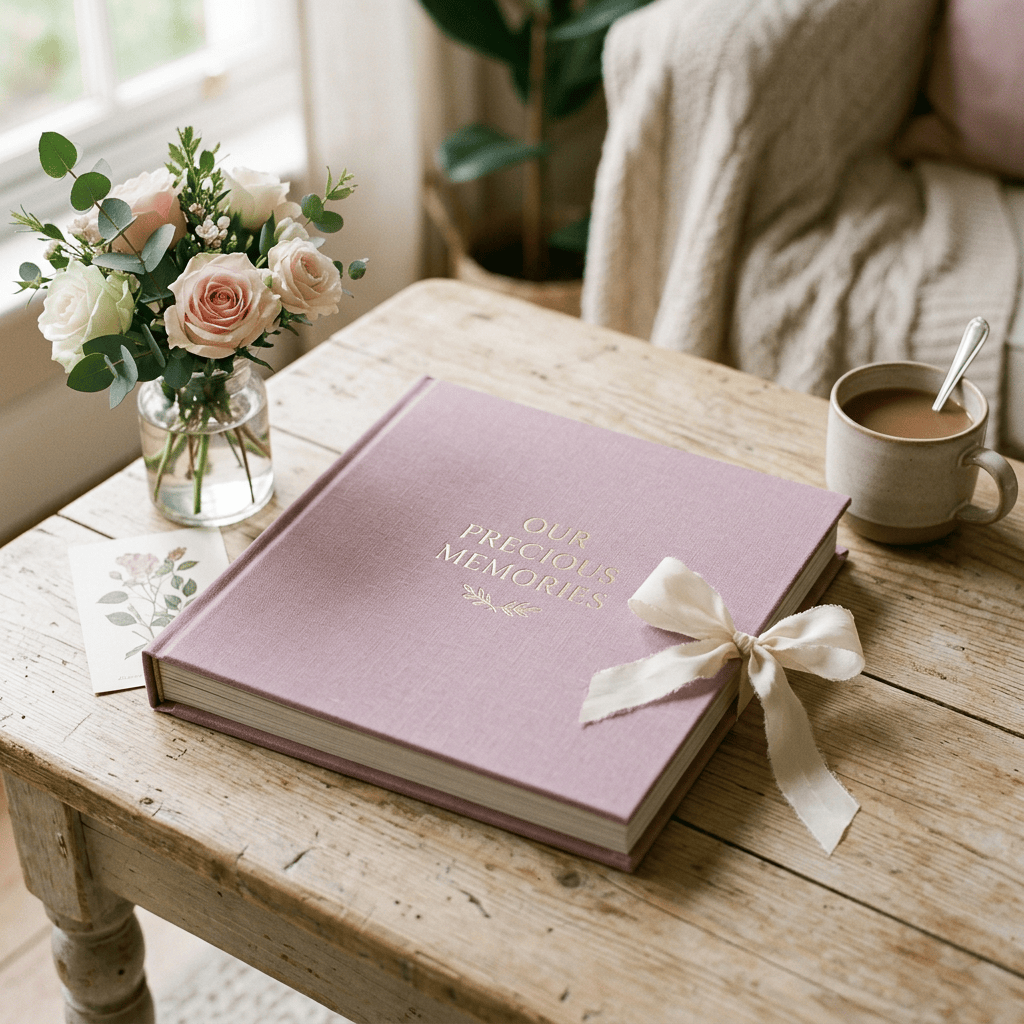
Some gifts are useful. Some are beautiful. And then there are the gifts that make someone stop, turn the first page, and immediately start remembering.
A personalized photo book falls into that last category.
Instead of buying something that will eventually sit on a shelf or disappear into a drawer, you can create a book filled with moments that actually mean something to the recipient. Favorite vacations, ridiculous family photos, milestones, friendships, pets, childhood memories, celebrations, or simply ordinary moments that became special over time can all become part of one thoughtful gift.
And the best part?
You don’t need to be a professional photographer or designer to make one.
With the right photos, a little organization, and a few personal touches, a photo book can become one of those gifts that gets looked through again and again.
Who Would Love a Personalized Photo Book?
The beauty of a photo book is that it can be adapted to almost anyone.
It works particularly well for someone who:
- Loves taking photos
- Enjoys sentimental gifts
- Has recently celebrated a major milestone
- Loves traveling
- Is difficult to shop for
- Appreciates handmade or personalized presents
- Has lots of memories stored on their phone
- Loves looking through old photographs
- Has recently moved away
- Is celebrating a relationship or friendship milestone
It’s also a wonderful option for people who already seem to have everything.
After all, you can’t really buy someone a duplicate of their own memories.
A photo book can also be especially meaningful for parents, grandparents, siblings, partners, best friends, newlyweds, graduates, or someone moving into a new chapter of life.
Why Photo Books Make Such Meaningful Gifts
We take thousands of photographs these days.
The problem is that many of them never leave our phones.
A photo book changes that.
Instead of endlessly scrolling through a camera roll, the recipient can physically hold a collection of memories in their hands. The photographs become part of an actual story rather than disappearing among screenshots, selfies, vacation pictures, and forgotten images.
There’s also something wonderfully personal about the fact that you chose the memories.
You aren’t simply handing someone a photo album.
You’re saying:
“I remembered this moment. I remembered you. And I thought it was worth keeping.”
That is what makes a photo book more than just a collection of pictures.
What Photos Should You Choose?
Don’t feel as though every photograph needs to be perfect.
In fact, some of the best photos for a personalized book aren’t necessarily the most polished ones.
Look for a mixture of:
The Big Moments
Include photographs from important occasions such as:
- Weddings
- Birthdays
- Graduations
- Anniversaries
- Holidays
- Family celebrations
- Concerts or events
- Trips and vacations
The Little Moments
These can be even more meaningful.
Think:
- A morning coffee together
- A favorite restaurant
- A ridiculous selfie
- A rainy-day adventure
- A beloved pet doing something silly
- A favorite family tradition
- A spontaneous road trip
- A photograph nobody expected to become a favorite
The Funny Ones
Don’t make the entire book picture-perfect.
A terrible haircut from ten years ago? Include it.
That photograph where everyone was looking in a different direction? Definitely.
The blurry picture from the night everyone still talks about?
Absolutely.
Those imperfect photographs often carry the biggest stories.
Photos That Tell a Story
Try not to choose photographs simply because they’re attractive.
Ask yourself:
Does this photo remind us of something?
If the answer is yes, it belongs in the book.
How to Organize the Pages
You don’t necessarily need to arrange the photographs chronologically.
Instead, think about what kind of story you want the book to tell.
Option 1: A Timeline
Start with the oldest memories and gradually move toward the present.
This works particularly well for:
- Anniversaries
- Birthdays
- Parents
- Grandparents
- Childhood-to-adulthood gifts
Option 2: By Theme
Create sections such as:
Adventures
Vacations, road trips, day trips and exploring.
People We Love
Family, friends and important people.
The Funny Stuff
Embarrassing photographs and ridiculous moments.
Everyday Magic
The ordinary moments that became special.
Celebrations
Birthdays, holidays, weddings and milestones.
Option 3: One Story
Choose one particular experience and turn it into a visual story.
A honeymoon.
A family vacation.
A year of friendship.
A baby’s first year.
A relationship’s first five years.
A particular summer.
This can make a smaller photo book feel incredibly cohesive.
Don’t Forget the Captions
Captions can transform a photograph from “nice picture” into “remember when…”
And they don’t need to be long.
Try:
Simple:
“Summer 2024 — our favorite escape.”
Funny:
“Nobody was prepared for what happened next.”
Sentimental:
“One of those ordinary days I’ll always remember.”
Playful:
“Evidence that we occasionally make good decisions.”
Personal:
“You were laughing so hard you couldn’t take the picture properly.”
You can also include little details:
“Saturday, 14 July — 11:42 a.m. — three coffees, one lost umbrella, and absolutely no idea where we were going.”
Those tiny details can bring an entire memory back to life.
Want It Funny? Lean Into the Chaos.
A photo book doesn’t have to be serious.
For a sibling, best friend, or partner with a good sense of humor, you could make the entire book deliberately ridiculous.
Add captions such as:
“We thought this was a good idea.”
“A photographic record of questionable decisions.”
“Nobody tell Mom.”
“Still no explanation for this photograph.”
“We looked better five minutes earlier.”
You could even create fake chapter titles:
Chapter One: Confidence
Chapter Two: Poor Decisions
Chapter Three: Things Escalated
Chapter Four: We Should Have Gone Home
Chapter Five: Somehow, We Survived
The humor makes the book feel uniquely yours rather than something that could have been purchased from a store.
Want It Sentimental? Focus on the Story.
For a more emotional photo book, slow things down.
Choose photographs that represent meaningful moments and pair them with short reflections.
You could include things like:
“This was the day everything changed.”
“I didn’t know it then, but this would become one of my favorite memories.”
“Somehow, all these years later, this still makes me smile.”
“Thank you for being part of so many of my favorite moments.”
The key is not to write something emotional underneath every photograph.
Let some pictures speak for themselves.
A photograph followed by a simple sentence can sometimes be more powerful than an entire paragraph.
Occasions When a Photo Book Works
One of the reasons this gift idea is so versatile is that it can work for almost any meaningful occasion.
Birthdays
Create a collection of favorite memories from childhood to the present.
Anniversaries
Tell the story of a relationship through photographs.
Weddings
A photo book can celebrate the couple’s journey before the wedding day.
Mother’s Day or Father’s Day
Create a family-focused collection filled with photographs and personal messages.
Graduation
Document childhood, school years, friendships and achievements.
Retirement
Create a visual record of someone’s career, colleagues, adventures and life outside work.
Christmas
Give grandparents, parents, siblings or friends a collection of memories instead of another generic present.
Moving Away
This can be particularly meaningful for a friend, sibling or family member beginning life somewhere new.
“Just Because”
Honestly, this might be one of the best reasons of all.
You don’t always need an occasion to tell someone:
“I love the memories we’ve made together.”
How to Present the Photo Book
The presentation can make the gift feel even more special.
Wrap the book in simple kraft paper with ribbon for a warm, handmade look.
For something more elegant, use a gift box with tissue paper and a handwritten card.
You could also add a small envelope containing a note that says:
“Open this before you start reading.”
Or make the recipient work for it.
Wrap the book in several layers of paper and put a different photograph or tiny clue between the layers.
If the book contains embarrassing photographs, you could even label the package:
“Contains photographic evidence.”
Just make sure they understand that they’ve been warned.
A Simple Card Message
If you’re giving the photo book to someone you love but don’t know what to write in the card, keep it simple.
Some memories deserve more than a place on a phone.
I wanted to give you something you could actually hold onto — a little collection of some of my favorite moments with you.
Here’s to the memories we’ve already made, the ones we somehow survived, and all the ones still waiting for us. ❤️
One Gift, Countless Memories
A personalized photo book isn’t necessarily the most expensive gift you can give someone.
That’s precisely what makes it so appealing.
Its value comes from the time, thought and memories behind it.
You choose the photographs. You decide the order. You add the captions. You decide whether the finished book should make them laugh, cry, reminisce — or all three.
And unlike another item that might eventually be forgotten in a cupboard, this is a gift they can pick up years from now and immediately return to a collection of moments that mattered.
Sometimes the best gifts aren’t new things at all. They’re old memories presented in a new way.
Make It Easy
If you don’t want to design a photo book completely from scratch, look for a photo-book service that offers customizable templates, different layouts and options for adding captions and text.
The important thing isn’t choosing the fanciest format.
It’s choosing a format that lets your memories take center stage.
And remember: you don’t need hundreds of photographs.
Even 20–40 carefully chosen pictures can tell a beautiful story when every image has a reason for being there.

Leave a comment