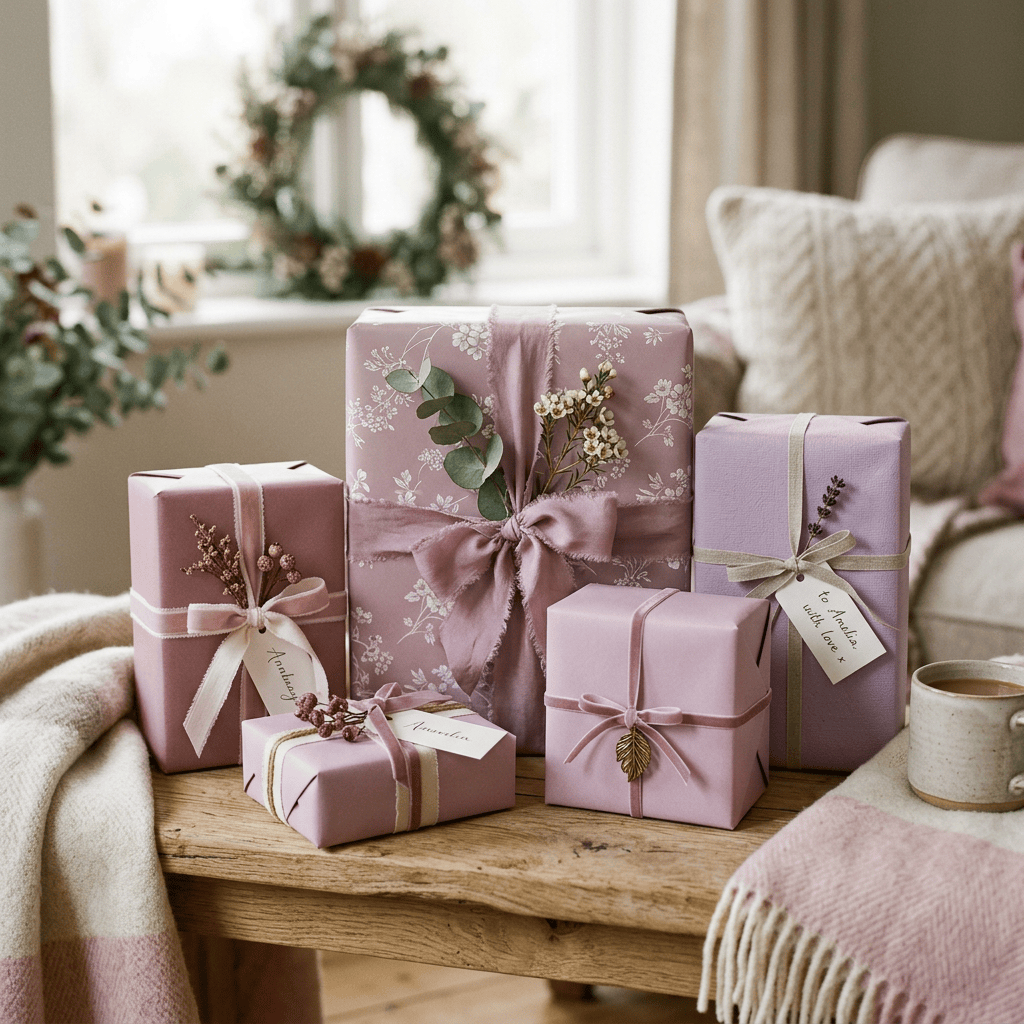
Finding a good gift isn’t always about finding the most expensive, impressive, or popular thing on the shelf.
Sometimes, the best gift is the one that makes someone say:
“How did you know I wanted this?”
Meaningful gifts usually aren’t chosen by scrolling through endless “best gifts for…” lists. They’re chosen by paying attention. To what someone says. What they do. What they complain about. What makes them happy. Even the little things they casually mention and immediately forget.
The good news? You don’t need to be naturally good at gift-giving to choose something thoughtful.
You just need to ask the right questions.
The next time you’re stuck wondering what to buy for someone’s birthday, anniversary, Christmas, graduation, wedding, or another special occasion, work through these ten questions.
1. What Does This Person Genuinely Enjoy?
Start with what they already love.
Think beyond broad categories like “she likes books” or “he likes sports.” Try to identify the details within those interests.
Does your friend love historical fiction specifically? Does your sister collect plants but struggle to keep them alive? Does your partner spend every Sunday experimenting with new recipes? Does your dad talk endlessly about a particular football team?
The more specific you get, the more personal your gift can become.
Instead of asking:
“What does this person like?”
Ask:
“What could I give them that connects with something they already genuinely enjoy?”
You don’t necessarily need to introduce them to a completely new hobby. Sometimes the perfect gift simply gives them more of something they already love.
Gift-giving tip
Pay attention to what they enthusiastically talk about without being prompted. People often reveal their best gift ideas themselves.
2. What Do They Complain About?
This might sound like an unusual way to choose a gift, but complaints can be incredibly useful.
People constantly tell us what frustrates them.
“My phone charger is always disappearing.”
“I can never find my keys.”
“I really need a better coffee mug for work.”
“My kitchen is so tiny.”
“I hate how uncomfortable these shoes are.”
“I keep forgetting to bring my lunch.”
Those little complaints can become excellent gift clues.
A meaningful gift doesn’t always have to be sentimental. Sometimes thoughtfulness looks like solving a tiny problem that has been irritating someone for months.
The key is to listen for repeat complaints, rather than temporary frustrations.
If they’ve mentioned the same annoyance several times, there’s probably an opportunity there.
Gift-giving tip
Think of this as the “What problem could I solve?” question.
A practical gift can feel incredibly personal when it shows that you’ve actually been listening.
3. What Do They Spend Money On?
Take a look at where this person’s money naturally goes.
Do they constantly buy skincare? Coffee? Books? Art supplies? Fitness equipment? Concert tickets? Baking ingredients? Stationery? Gaming accessories?
Their spending habits can tell you what they value.
You don’t have to buy them exactly what they already purchase, either. Their habits can simply point you toward the right category.
For example, someone who regularly visits cafés might appreciate something that makes their coffee ritual at home more enjoyable.
Someone who constantly buys books might love a beautiful reading accessory.
Someone who spends every weekend outdoors might appreciate something that makes their adventures easier.
You’re essentially asking:
“What does this person willingly spend money on because it matters to them?”
That’s often a much better clue than simply searching for “gifts for women” or “gifts for men.”
4. What Would Make Their Everyday Life Easier?
Some of the most appreciated gifts aren’t particularly glamorous.
They’re useful.
Think about the person’s daily routine.
What do they do every morning? What do they carry around? What tasks do they repeatedly perform? What little inconvenience could be removed from their day?
Maybe they are always rushing out the door.
Maybe they work from home.
Maybe they travel frequently.
Maybe they’re constantly cooking.
Maybe they’re always losing something.
Maybe they’re exhausted and would appreciate something that makes relaxation easier.
The perfect practical gift doesn’t feel like a household chore disguised as a present. It should make something they already do better, easier, more comfortable, or more enjoyable.
The test
Ask yourself:
“Would this person actually use this?”
If the answer is yes, you’re probably onto something.
5. What Memory Do You Share?
Now move beyond the person’s habits and think about your relationship.
What memories belong specifically to the two of you?
Maybe you took a spontaneous road trip together.
Maybe you always watched the same television show growing up.
Maybe you have an inside joke.
Maybe you met at a particular place.
Maybe you survived an embarrassing moment together that you still laugh about.
Maybe there’s a song, food, movie, location, or phrase that immediately reminds you of them.
A gift connected to a shared memory can feel far more meaningful than something chosen simply because it looked nice.
You could give them something that represents the memory itself—or something that quietly references it.
And you don’t necessarily need to explain the connection.
Sometimes the best reaction is:
“Wait… is this because of that time we…?”
That’s when a gift becomes a story.
6. What Have They Recently Mentioned Wanting?
This one sounds obvious, but people overlook it constantly.
Someone says:
“I’ve always wanted one of those.”
“I really want to try that restaurant.”
“I’ve been meaning to buy a new…”
“I’d love to see them live someday.”
“I wish I had…”
And then the conversation moves on.
Meanwhile, you’ve just been handed a gift idea.
Start keeping a mental—or actual—list of these comments throughout the year.
You don’t have to wait until two weeks before someone’s birthday to start thinking about what they want.
In fact, casual comments made months before an occasion can lead to the most impressive gifts.
The recipient may have completely forgotten they ever mentioned it.
Which makes your ability to remember feel even more thoughtful.
Pro tip
Keep a private gift-notes list on your phone.
Whenever someone casually mentions something they’d love, add it.
Future-you will be extremely grateful.
7. Do They Value Experiences or Possessions?
Not everyone experiences gifts in the same way.
Some people adore opening a beautifully wrapped box and having something tangible to keep.
Others would much rather go somewhere, try something new, or spend quality time with someone they love.
Think about which category fits the person you’re buying for.
They may prefer experiences if they:
- Love travelling
- Enjoy concerts, theatre, or events
- Frequently suggest going somewhere
- Prefer making memories to collecting things
- Have limited space
- Are difficult to shop for
They may prefer physical gifts if they:
- Enjoy collecting things
- Love decorating their home
- Appreciate beautiful or useful objects
- Frequently talk about things they’d like to own
- Enjoy unwrapping presents
And, of course, many people enjoy both.
The important thing is not to assume that your preferred type of gift is automatically theirs.
A gift should reflect the recipient—not the giver.
8. What Wouldn’t They Buy for Themselves?
This question can lead you toward some wonderfully memorable gifts.
There are things people want but don’t necessarily justify buying.
Maybe they consider something too luxurious.
Maybe they think it’s unnecessary.
Maybe they keep saying, “I’d never spend that much on myself.”
Maybe it’s simply something they wouldn’t think to purchase.
This is where gifting can become special.
You’re giving someone permission to enjoy something they might not have chosen for themselves.
However, there’s an important distinction:
Don’t confuse “wouldn’t buy” with “wouldn’t want.”
A person who doesn’t buy expensive candles because they think they’re unnecessary might love receiving one.
A person who doesn’t buy bright clothing because they dislike it probably won’t suddenly love it because you purchased it.
The goal is to identify something they would enjoy but wouldn’t prioritize for themselves.
9. What Would Feel Personal Rather Than Generic?
Before buying anything, ask:
“Could this gift have been given to almost anyone?”
If the answer is yes, look for a way to personalize it.
That doesn’t necessarily mean adding their name to something.
Personalization can come from choosing:
- Their favorite color
- Their favorite author
- Their favorite character
- A meaningful date
- An inside joke
- A shared memory
- Their favorite hobby
- Something connected to their personality
- A detail only you would know
You can even make a relatively ordinary gift feel personal by combining it with something meaningful.
For example, a notebook becomes more special when paired with a handwritten message about why you chose it.
A book becomes more meaningful when you write a personal note inside the cover.
A simple experience becomes memorable when you explain why you wanted to experience it with them.
The thought behind the gift often matters more than the object itself.
10. Can the Gift Tell Them Something You Can’t Easily Say?
This may be the most powerful question of all.
Ask yourself:
“What do I want this person to feel when they open this?”
Maybe you want them to know you’re proud of them.
Maybe you want to say thank you.
Maybe you want to remind them that they’re loved.
Maybe you want to celebrate how far they’ve come.
Maybe you want to tell them that you believe in them.
Maybe you simply want to say:
“I’m glad you’re in my life.”
A gift can communicate things that sometimes feel awkward to say aloud.
That’s especially true for emotional occasions.
A graduation gift can say, I believe in your future.
A birthday gift can say, I’m grateful you’re here.
An anniversary gift can say, I still choose you.
A friendship gift can say, Our memories matter to me.
A sympathy gift can say, You don’t have to go through this alone.
When you know what you want the gift to communicate, choosing the actual gift often becomes much easier.
The Meaningful Gift Formula
If you’re still stuck after answering all ten questions, combine your answers.
Look for the overlap between:
What they love + what they need + what you’ve shared + what they value.
That’s where the strongest gift ideas usually live.
For example:
They love reading.
They keep complaining about being uncomfortable while reading in bed.
You both have a favorite book series.
They recently mentioned wanting to make their bedroom cozier.
Suddenly, you aren’t searching for “gifts for book lovers.”
You’re looking for something that connects reading + comfort + your shared memory + their current interests.
That’s a much narrower—and much more useful—starting point.
What If You Still Can’t Think of Anything?
Don’t panic.
Sometimes you genuinely don’t know what someone wants.
When that happens, resist the temptation to buy something random just because you feel pressured to give them something.
Instead, consider:
Give them a choice.
A gift card to a place they genuinely love can be thoughtful when it’s chosen specifically for them.
Give them an experience.
Plan something you can enjoy together.
Give them time.
For someone who is busy, overwhelmed, or simply values quality time, your presence may be more meaningful than another object.
Ask them.
There’s nothing inherently unthoughtful about asking someone what they would like—especially if you know they have strong preferences.
Give a small gift with a meaningful message.
Sometimes the emotional thought behind a modest present matters more than the price tag.
The Gift Doesn’t Have to Be Perfect
There’s a strange pressure surrounding gift-giving.
We worry that the present needs to be impressive enough.
Expensive enough.
Original enough.
Pinterest-worthy enough.
But most people aren’t secretly keeping score.
What they often remember is the feeling behind the gift.
They remember that you noticed.
You listened.
You remembered something they said six months ago.
You connected a present to a ridiculous inside joke.
You picked something because it reminded you of them.
You took the time to write a card instead of simply signing your name.
That’s what turns a present into a meaningful gift.
So the next time you’re staring at a blank search bar wondering what on earth to buy, don’t start with:
“What should I buy?”
Start with:
“What do I know about this person?”
The answer may lead you to the perfect gift much faster than another endless list of “50 Best Gifts for Everyone.”
A Quick Gift-Giving Checklist
Before you buy, ask yourself:
☐ What does this person genuinely enjoy?
☐ What do they repeatedly complain about?
☐ What do they willingly spend money on?
☐ What could make their everyday life easier?
☐ What memories do we share?
☐ Have they recently mentioned wanting something?
☐ Do they prefer experiences or possessions?
☐ Is this something they’d enjoy but wouldn’t buy themselves?
☐ Does the gift feel specifically chosen for them?
☐ What could this gift say that I might struggle to say myself?
If you can answer even several of these questions, you’re already much closer to finding a gift that feels thoughtful rather than generic.
Because the best gift isn’t necessarily the one with the biggest price tag.
It’s the one that makes someone feel seen.

Leave a comment